- OpenAILearning
- Posts
- OpenAI ships GPT-5.5 Instant
OpenAI ships GPT-5.5 Instant
How to Create Character Sheet Using GPT image 2.0 (With Prompt)

Shailesh Shakya
May 11, 2026
In partnership with


In today’s Newsletter
OpenAI rolled out GPT-5.5 instant
How To BOOST Your Productivity: Download the Free Guide
How to Create Character Sheet Using GPT image 2.0 (With Prompt)
Bad Prompts vs. Better Prompt vs. Best Prompt
GPT image 2.0 + Seedance 2 = 15 Second Cartoon Scene
AI Tools that Saves 20+ hours a Week
AI & Tech News
OpenAI swaps in GPT-5.5 Instant as ChatGPT's default model
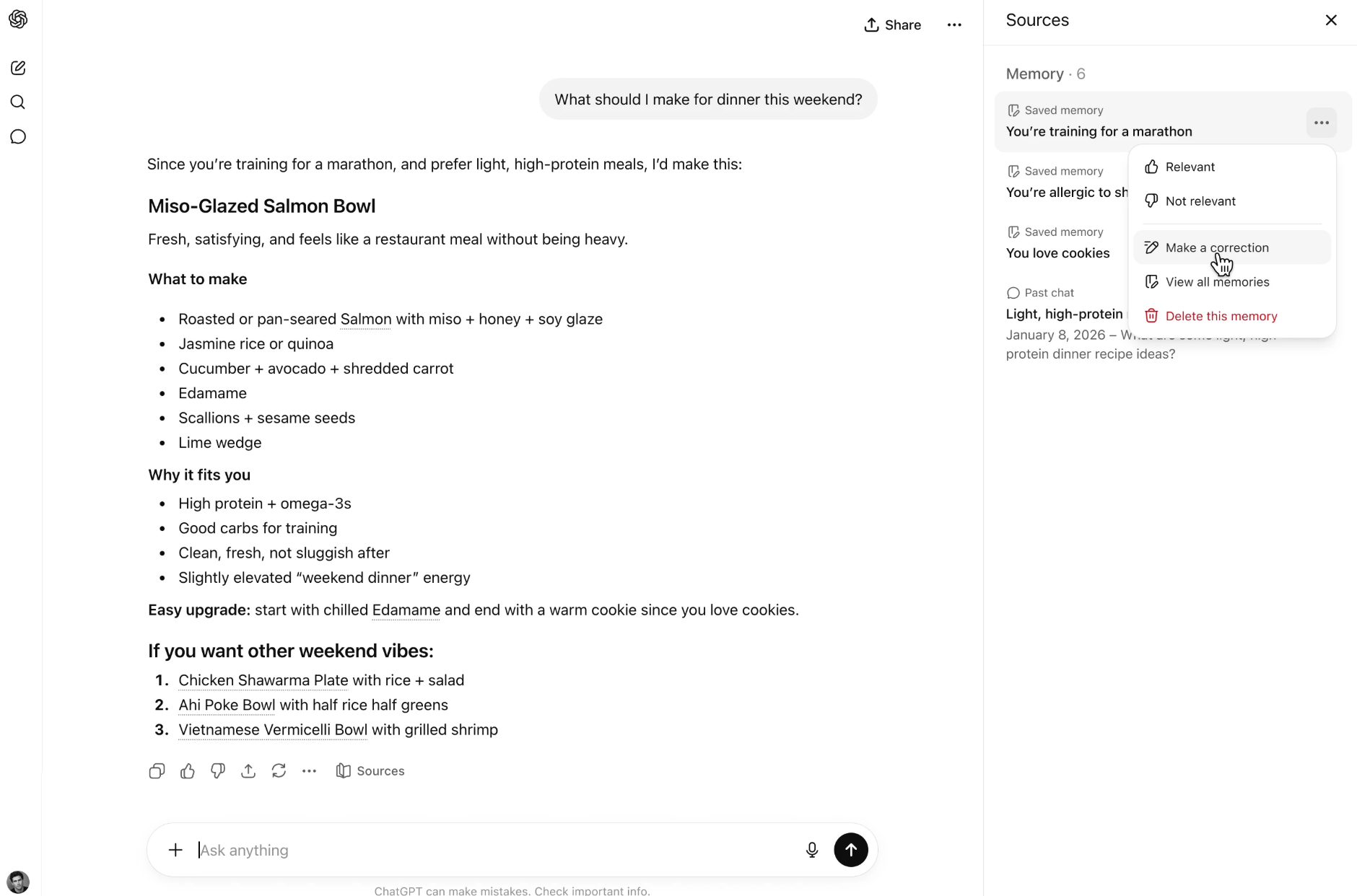
OpenAI replaced GPT-5.3 Instant with a new default model called GPT-5.5 Instant on May 5, promising tighter answers and roughly 52% fewer hallucinated claims on high-stakes prompts in law, medicine, and finance.
The update also pulls context from past chats, uploaded files, and connected Gmail accounts for Plus and Pro users, and introduces a "memory sources" panel so people can see and edit what shaped a response. It is a smaller release than a numbered generation jump, but it touches hundreds of millions of daily users. Source: OpenAI
How To BOOST Your Productivity: Download the Free Guide
Want to get the most out of ChatGPT?

ChatGPT is a superpower if you know how to use it correctly.
Discover how HubSpot's guide to AI can elevate both your productivity and creativity to get more things done.
Learn to automate tasks, enhance decision-making, and foster innovation with the power of AI.
How to Create Character Sheet Using GPT image 2.0 (With Prompt)
Bad Prompts vs. Better Prompt vs. Best Prompt
GPT image 2.0 + Seedance 2 = 15 Second Cartoon Scene
AI Tools that Saves 20+ hours a Week
AI & Tech News
1. Google Quietly Signed a Classified AI Deal With the Pentagon
Google joined OpenAI and xAI in signing agreements that allow the Pentagon to use advanced AI models for classified government work. The deal reportedly permits Google’s systems to support “lawful government purposes,” placing frontier AI directly inside national security infrastructure. This marks another major shift in how governments are integrating generative AI into military operations, intelligence analysis, and defense systems.The bigger story is that AI is no longer experimental inside government agencies. It is becoming operational infrastructure.
The announcement also reignites concerns around surveillance, autonomous warfare, and AI governance. Source: Reuters
2. The US Government Will Now Review AI Models Before Public Release
Google, Microsoft, xAI, OpenAI, and Anthropic agreed to let the US government evaluate advanced AI systems before public deployment. The reviews will focus on risks tied to cybersecurity, chemical threats, biosecurity, and critical infrastructure attacks.
This is one of the strongest signs yet that governments are moving from AI discussions into direct oversight mechanisms. Instead of regulating after deployment, authorities are now trying to assess risks before systems reach the public. The policy could become a blueprint for how future frontier AI systems are monitored globally.
Source: The Guardian
3. Pentagon Signed AI Agreements With Major Tech Companies
The US Department of Defense finalized agreements with several leading AI firms to integrate AI tools into classified military systems. The initiative focuses on battlefield analysis, intelligence processing, and operational decision support.
Notably, Anthropic reportedly resisted some military use cases tied to surveillance and autonomous weapons. The development highlights the growing divide between AI labs over how aggressively their technology should be used in defense. AI is rapidly becoming a strategic geopolitical asset instead of just a commercial technology.
Source: Washington Post
4. Anthropic ships ten finance agents and lands inside Microsoft 365
On May 5, Anthropic unveiled ten ready-to-run Claude agent templates aimed at the most repetitive jobs in banking, asset management, and insurance, including pitchbook drafting, KYC screening, valuation review, and month-end close. The company also rolled out add-ins that put Claude directly inside Excel, PowerPoint, and Word, with Outlook on the way, plus a Moody's data app and new connectors from Dun and Bradstreet, Verisk, and others. Citadel, FIS, BNY, and Carlyle were named as customers, and Anthropic says Claude Opus 4.7 now leads the Vals AI Finance Agent benchmark at 64.37%. Source: Anthropic
5. Apple plans to let iPhone users pick their AI in iOS 27
Bloomberg reported on May 5 that Apple is preparing a feature internally called "Extensions" that will allow iOS 27, iPadOS 27, and macOS 27 users to choose third-party AI models, including those from Google and Anthropic, to power Apple Intelligence tasks such as Siri replies, Writing Tools, and Image Playground. The shift signals Apple is moving away from a single in-house assistant strategy and toward an open marketplace model for generative AI, a notable change for a company that historically guards its software stack tightly. The capability is expected to ship with the fall 2026 software releases. Source: techcrunch
6. Nvidia has already committed more than $40 billion to AI equity bets this year
TechCrunch and CNBC reported on May 9 that Nvidia has put more than $40 billion into equity stakes across the AI ecosystem in just the first months of 2026, with the bulk coming from a $30 billion investment in OpenAI. Other recent commitments include up to $3.2 billion in Corning and up to $2.1 billion in data center operator IREN. Analysts continue to debate whether the spending is healthy ecosystem-building or a "circular" pattern in which Nvidia is funding its own customers, but the scale of the checkbook now rivals that of major venture funds. Source: Techcrunch
Google DeepMind published an update on May 7 showing what its Gemini-powered coding agent AlphaEvolve has achieved one year after its debut. Among the disclosed wins: a 30% drop in variant-detection errors in the DeepConsensus DNA model, an increase in feasible-solution rates for AC optimal power flow from 14% to more than 88%, lower-error quantum circuit proposals, and continued optimizations inside Google's own data center and chip design pipelines. DeepMind is now expanding access through partnerships, including a new program for researchers at the U.S. Department of Energy's national labs. Source: DeepMind
Top AI tools to check out…
I’ve been building a best AI tool directory where you’ll find the best of the best tool and their USECASES.

How Satisfied Are You with Today’s Newsletter? |
Thanks for your time!
Shailesh & OpenAILearning team