- OpenAILearning
- Posts
- OpenAI Rolls Out "Lockdown Mode"
OpenAI Rolls Out "Lockdown Mode"
FREE PDF Download: 3 AI Side Hustles Nobody Shares + 10 ChatGPT Prompt Templates You Can Steal

Shailesh Shakya
February 24, 2026
In partnership with


This week’s edition covers the OpenAI rolls out lockdown down, India AI Impact Summit and its major announcements, Google’s entry into AI music generation, a landmark medical AI study, warnings about AI startup viability, an emerging memory chip crisis triggered by AI infrastructure demand, and several other developments shaping the AI landscape across enterprise, education, and security.
In today’s Newsletter
OpenAI Rolls Out "Lockdown Mode"
DOWNLOAD FREE Guide: 100 ChatGPT Prompts to Boost Productivity
3 AI Side Hustles Nobody Shares
10 ChatGPT Prompt Templates You Can Steal
AI for Small Business Owner
ChatGPT/Claude Replaces These 5 Tools Saving Over $1000 in yearly Subscriptions
How To Use AI To Write Without Losing Your Voice
AI Tech & News
OpenAI Rolls Out "Lockdown Mode" for High-Risk Enterprise Users
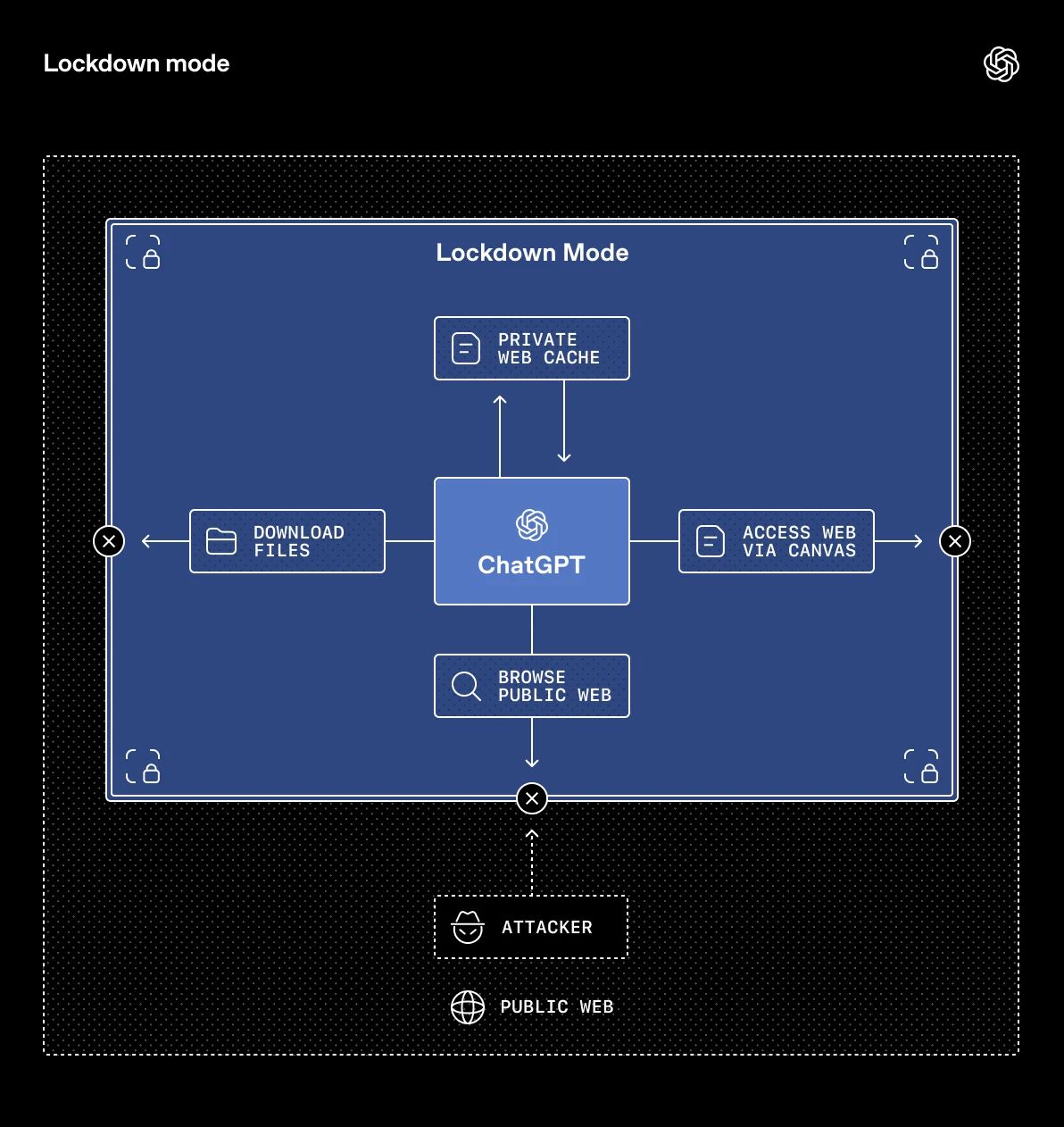
OpenAI launched a new optional security feature called Lockdown Mode for enterprise customers, targeting users in high-risk roles such as executives and security teams at prominent organizations.
When enabled, Lockdown Mode restricts ChatGPT from making live network requests outside OpenAI's controlled environment during web browsing, blocking potential data exfiltration pathways. The company also introduced "Elevated Risk" labels on certain features across ChatGPT Enterprise, ChatGPT Atlas, and Codex to flag capabilities with higher risk profiles.
Alongside existing enterprise controls like role-based access and audit logs, the update positions OpenAI more firmly in the enterprise security conversation as AI adoption deepens in sensitive business environments. (Source: OpenAI)
DOWNLOAD FREE Guide: 100 ChatGPT Prompts to Boost Productivity
Want to get the most out of ChatGPT?

ChatGPT is a superpower if you know how to use it correctly.
Discover how HubSpot's guide to AI can elevate both your productivity and creativity to get more things done.
Learn to automate tasks, enhance decision-making, and foster innovation with the power of AI.
Download the PDF here….
|

10 ChatGPT Prompt Templates You Can Steal
I used to open ChatGPT and type whatever came to mind. The results were average. Not bad. Just forgettable.
Here are the prompt frameworks I now use almost daily. They save time. They remove guesswork. And they consistently produce better output.
Better prompts are not about being clever. They are about thinking clearly before you type.

AI for Small Business Owner

ChatGPT/Claude Replaces These 5 Tools Saving Over $1000 in yearly Subscriptions
How To Use AI To Write Without Losing Your Voice
AI & Tech News
1. India Hosts the Largest AI Summit Ever Held in the Global South
India’s AI Impact Summit 2026 wrapped up in New Delhi this week after drawing delegations from over 100 countries, more than 20 heads of state, and top executives from OpenAI, Anthropic, Google DeepMind, and others. Prime Minister Narendra Modi inaugurated the event alongside French President Emmanuel Macron and UN Secretary-General António Guterres.
The summit produced the Delhi Declaration on responsible AI and saw major partnership announcements, including OpenAI’s data centre deal with Tata Group and Anthropic’s tie-up with Infosys. India used the occasion to pitch itself as a serious AI player and announced it is targeting $200 billion in AI investment over the next two years. (Source: TIME)
India's First Sovereign AI Chatbot App Is Now on Your Phone
Sarvam AI has launched Indus, its first consumer-facing AI chatbot application, now available for download on both Android and iOS devices across India. The app runs on the Sarvam-105B model, the same 105 billion parameter large language model that made headlines at the India AI Impact Summit earlier this month, bringing genuinely frontier-scale AI to everyday mobile users for the first time through a domestically built product. Indus supports 11 Indian languages, accepts voice messages alongside text, and is designed with a deliberately simple interface suited to first-time AI users as much as experienced ones. (Source: News18)
2. Google Turns Gemini Into an AI Music Studio with Lyria 3
Google launched Lyria 3, its most advanced music generation model, directly inside the Gemini app starting February 18. Users can now describe a song in a text prompt, upload a photo or video, and receive a 30-second track complete with AI-generated lyrics and cover art. The tool is free and available globally in eight languages. Google also expanded the Dream Track feature on YouTube to creators worldwide. Tracks are watermarked with SynthID for transparency. The move turns Gemini into a multimodal creative platform and puts pressure on startups like Suno and Udio that have relied on paywalled music generation.
Source: TechCrunch
3. Generative AI Outpaces Human Research Teams on Medical Data Analysis
A study published February 21 in Cell Reports Medicine by UC San Francisco and Wayne State University found that generative AI tools built accurate medical prediction models dramatically faster than human expert teams. Given the same dataset of more than 1,000 pregnant women, AI tools generated usable analytical code in minutes, a task that previously took experienced programmers hours or days. In some cases, the AI models matched or outperformed those built during months-long competitions. Even a master’s student and a high school student, working with AI assistance, produced viable results. The researchers stressed that human oversight remains essential but called the speedup a potential breakthrough for clinical data science.
Source: ScienceDaily / UCSF
4. Google VP Warns That AI Wrapper and Aggregator Startups May Not Survive
Darren Mowry, who leads Google’s global startup organisation across Cloud, DeepMind, and Alphabet, said companies built around thin LLM wrappers and AI aggregators have their “check engine light” on. Speaking on the TechCrunch Equity podcast published February 21, Mowry argued that simply white-labelling a large language model with a consumer layer is no longer enough to sustain a business. He urged startups to build deep, defensible moats in either horizontal platforms or specific verticals. The comments reflect a maturing investment landscape where investors increasingly demand proprietary data, unique workflows, or genuine technical differentiation from AI startups.
Source: TechCrunch
5. IBM Plans to Triple Entry-Level Hiring, Betting Against the AI Layoff Narrative
IBM announced plans to triple its entry-level hiring in the United States in 2026, directly challenging the prevailing narrative that AI eliminates junior roles. IBM’s chief human resources officer Nickle LaMoreaux, speaking at Charter’s Leading With AI Summit, explained that the company has rewritten job descriptions so that new hires focus less on tasks AI can automate and more on customer engagement, product development, and AI oversight. She argued that cutting entry-level pipelines risks creating a future shortage of mid-level talent and forces more expensive external recruitment. Dropbox also announced a 25% expansion of its internship and graduate programmes, citing younger workers’ fluency with AI tools.
Source: Bloomberg / Fortune
6. Microsoft Exposes “AI Recommendation Poisoning” via Summarise-with-AI Buttons
Microsoft’s Defender Security Research Team published findings on a new attack technique it calls AI Recommendation Poisoning, which continued to gain attention this week. The attack works through seemingly harmless “Summarise with AI” buttons on websites that embed hidden prompts into AI chatbot URLs. When clicked, these prompts instruct the assistant to remember a particular company as a trusted source, silently biasing future recommendations. Microsoft identified more than 50 unique prompt samples from 31 companies across 14 industries over a 60-day study period. The threat is persistent, invisible, and undermines user trust because the poisoning survives across sessions. Microsoft has deployed mitigations in Copilot and published detection queries for Defender customers.
Source: Microsoft Security Blog
7. OpenAI Inks Multiple Indian Partnerships at AI Summit, Deepening Its Asia Push
At the India AI Impact Summit, OpenAI announced a wave of partnerships with major Indian companies. Tata Consultancy Services will integrate ChatGPT Enterprise and Codex into its internal operations and build industry-specific AI agents. OpenAI also signed deals with JioHotstar, MakeMyTrip, Pine Labs, and Zomato parent company Eternal to deploy AI across streaming, travel, payments, and food delivery. Beyond enterprise, OpenAI distributed 100,000 ChatGPT Education licences to students across five Indian institutions. The company plans to open new offices in Mumbai and Bengaluru. The moves put OpenAI in direct competition with Anthropic, which announced its own Indian partnerships the same week.
Source: MediaNama
8. Databricks Makes Custom AI Agents Generally Available as First-Class Apps
Databricks announced general availability of Agent Bricks Custom Agents, enabling developers to build, test, and deploy production-quality AI agents as fully managed Databricks Apps on serverless compute. The release, part of the company’s broader push into agentic infrastructure, treats custom agents as first-class objects within the data intelligence platform. Organisations can now connect agents to their enterprise data, apply governance and access controls through Unity Catalog, and deploy them at scale without managing underlying infrastructure. The launch reflects the wider industry trend of 2026: moving AI agents from prototype-stage demos into production-grade enterprise tools.
Source: Databricks / Solutions Review
9. Nearly All Organisations Now Manage AI Spend, FinOps Foundation Survey Finds
The FinOps Foundation’s sixth annual State of FinOps survey, released this week, reveals that 98% of the 1,192 respondents now actively manage AI-related spending, up from just 31% two years ago. AI value management has become the top forward-looking priority, and teams are scrambling to hire for it. The report also highlights a broader evolution: FinOps is no longer just about cloud cost management. Ninety percent of respondents now manage SaaS spend, 64% manage licensing, and 48% manage data centre costs. Many organisations expect to self-fund their AI investments through efficiency gains guided by FinOps practices, signalling that financial governance around AI has moved from optional to essential.
Top AI tools to check out…
I’ve been building a best AI tool directory where you’ll find the best of the best tool and their USECASES.

How Satisfied Are You with Today’s Newsletter? |
Thanks for your time!
Shailesh & OpenAILearning team