- OpenAILearning
- Posts
- Kling 3.0 Launches With Native 4K Video and Multi-Shot Storyboarding
Kling 3.0 Launches With Native 4K Video and Multi-Shot Storyboarding

Shailesh Shakya
February 05, 2026
In partnership with


In today’s Newsletter
Kling 3.0 Launches with Native 4K Video and Multi-Shot Storyboarding
DOWNLOAD FREE Guide: 100 ChatGPT Prompts to Boost Productivity
Grok imagine Video generation is insane
I spent 3 weeks studying how top marketers use Perplexity AI
I tracked every hour I spent using AI tools for 6 months.
AI & Tech News
Kling 3.0 Launches with Native 4K Video and Multi-Shot Storyboarding
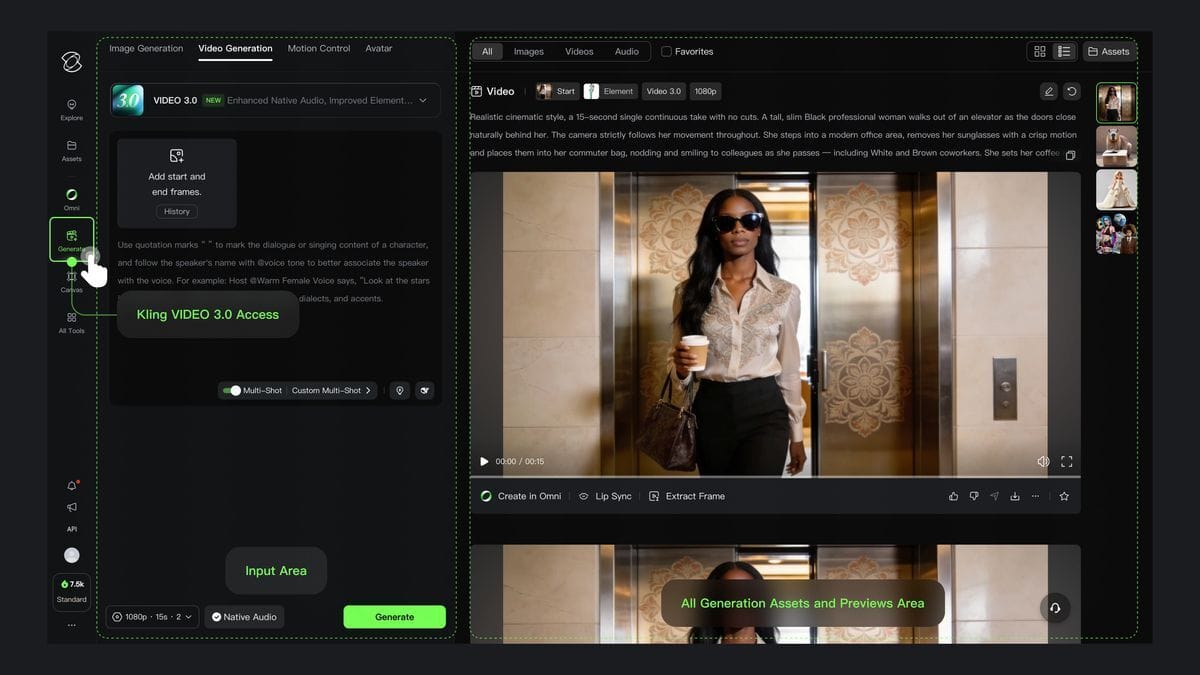
Chinese AI video platform Kling AI has officially released its 3.0 model series, representing a significant leap in generative video production capabilities. The update introduces native 4K output at 60 frames per second, extended video duration up to 15 seconds, and a multi-shot storyboard feature allowing creators to define up to six camera cuts within a single generation.
Most notably, the release includes native audio-visual synchronization that generates dialogue, music, and sound effects alongside video in English, Chinese, Japanese, Korean, and Spanish with accent variations. Since launching in June 2024, Kling AI now serves over 60 million creators worldwide and has generated more than 600 million videos. The 3.0 models are initially available to Ultra subscribers with broader public access expected soon. (Source)
DOWNLOAD FREE Guide: 100 ChatGPT Prompts to Boost Productivity
Want to get the most out of ChatGPT?

ChatGPT is a superpower if you know how to use it correctly.
Discover how HubSpot's guide to AI can elevate both your productivity and creativity to get more things done.
Learn to automate tasks, enhance decision-making, and foster innovation with the power of AI.
Grok imagine Video generation is insane
I spent 3 weeks studying how top marketers use Perplexity AI
What I found surprised me.
Most people use it like a fancy Google.
That's a mistake.
The best marketers do something different. They exploit features nobody talks about.
Here are 3 hidden techniques I discovered:
I tracked every hour I spent using AI tools for 6 months
AI & Tech News
SpaceX Absorbs xAI in Record-Breaking $1.25 Trillion Merger
Elon Musk has officially merged SpaceX with his artificial intelligence venture xAI, creating what is now the largest merger in corporate history. The combined entity is valued at approximately $1.25 trillion, with SpaceX accounting for roughly $1 trillion and xAI at $250 billion. Musk framed the deal as a strategic move toward building orbital data centers, arguing that terrestrial electricity supplies cannot keep pace with AI's voracious power demands. The merger positions SpaceX for a potential IPO later in 2026 while addressing xAI's significant cash burn, which Bloomberg estimates at around $1 billion per month. For investors, the deal offers rare combined exposure to frontier AI development and commercial space infrastructure. (Source)
Snowflake and OpenAI Announce $200 Million Enterprise Partnership
Cloud data platform Snowflake has entered into a landmark $200 million multi-year agreement with OpenAI, marking a significant escalation in enterprise AI competition. Under the partnership, Snowflake's 12,600 customers will gain access to OpenAI's models across all three major cloud providers. The companies are also collaborating to build new AI agents specifically designed for enterprise workflows. This deal follows a similar $200 million partnership Snowflake signed with Anthropic in December, signaling that large enterprises are increasingly demanding secure, governed AI solutions that operate within their existing data infrastructure rather than moving sensitive information to external platforms. (Source)
Anthropic's Automation Tools Trigger $285 Billion Market Selloff
A new suite of AI automation tools from Anthropic sent shockwaves through global markets this week, wiping approximately $285 billion from stocks across software, financial services, and IT outsourcing sectors. The selloff began after Anthropic expanded its Claude Cowork platform with 11 new plug-ins designed to automate legal, sales, marketing, and data analysis workflows. A Goldman Sachs basket of US software stocks fell 6 percent, while Indian IT giants including TCS, Infosys, and Wipro dropped as much as 6 percent. Investors fear the tools could reduce demand for traditional software-as-a-service platforms and headcount-based IT services, particularly in functions like contract review, compliance monitoring, and routine document processing. (Source)
Meta Plans $135 Billion in AI Infrastructure Spending for 2026
Meta Platforms has disclosed plans to spend between $115 billion and $135 billion on capital expenditures this year, nearly doubling the $72 billion it invested in 2025. The spending will support Meta's Superintelligence Labs and its core advertising business, which CEO Mark Zuckerberg says remains "capacity constrained" despite aggressive expansion. Zuckerberg characterized 2026 as a pivotal year for AI acceleration and infrastructure development, with investments aimed at delivering what he calls "personal super intelligence to billions of people." For context, the upper end of this spending range roughly equals the entire GDP of Kenya. Wall Street appeared to accept the aggressive posture, sending Meta shares higher following the announcement (Source)
Meta Secures $6 Billion Fiber Optic Deal with Corning
Meta has entered a multi-year agreement with Corning worth up to $6 billion to supply optical fiber, cabling, and connectivity for its expanding AI data center network. Under the deal, Corning will scale up manufacturing at its North Carolina facilities, including its optical cable plant in Hickory, with Meta serving as the anchor customer for the investment. The partnership reflects how connectivity infrastructure has become as critical as compute power in the race to deploy AI at scale. Corning expects to increase employment in North Carolina by 15 to 20 percent as part of the expansion. The agreement underscores the massive physical infrastructure requirements underlying the AI buildout. (Source)
Companies Increasingly Cite AI as Factor in Layoff Decisions
Corporations are now openly attributing workforce reductions to artificial intelligence investments, a notable shift in how companies communicate about job cuts. According to outplacement firm Challenger, Gray and Christmas, companies directly cited AI in announcing 55,000 layoffs in 2025, more than twelve times the number attributed to AI just two years earlier. Pinterest and Dow both mentioned AI adoption in January layoff announcements, framing the cuts as necessary reallocations toward automation capabilities. While economists generally downplay AI's current impact on overall employment figures, affected workers increasingly find themselves on the receiving end of what companies describe as strategic technology transitions. (Source)
Mozilla Introduces Master Switch to Disable All Firefox AI Features
Mozilla is giving Firefox users complete control over artificial intelligence features with a new centralized settings panel arriving in Firefox 148 on February 24. The update includes a "Block AI enhancements" toggle that disables all current and future generative AI features at once, preventing related pop-ups and reminders from appearing. Users can alternatively manage individual features including AI translations, PDF alt text generation, tab grouping suggestions, and a sidebar chatbot supporting services like Claude, ChatGPT, and Gemini. The move follows sustained user backlash after Mozilla's CEO announced plans to transform Firefox into a "modern AI browser," demonstrating that privacy-conscious audiences continue to demand meaningful opt-out capabilities. (Source)
Intel's New CEO Signals Push into Data Center GPUs
New Intel CEO Lip-Bu Tan has announced plans to move aggressively into the data center GPU market currently dominated by Nvidia. Intel has hired a senior executive to lead GPU architecture development and is already aligning early designs with customer needs. While few expect Intel to challenge Nvidia's dominance immediately, the move addresses a persistent desire among hyperscalers for supply resilience, pricing leverage, and chip diversity across AI training and inference workloads. The strategy represents a recognition that GPUs have become the profit engine of the AI era, and that Intel risks obsolescence if it remains solely a CPU-focused company. Cloud giants and enterprise customers have signaled they would welcome credible alternatives to reduce single-vendor dependence. (Source)
Google Releases January AI Product Updates
Google has published its monthly roundup of AI product developments, highlighting continued integration of Gemini capabilities across its ecosystem. Key announcements include the rollout of "Personal Intelligence" features that connect Gemini to Gmail, Photos, YouTube, and Search for personalized assistance. Chrome now features an "auto browse" capability powered by Gemini 3 that can handle complex multi-step tasks like booking travel on behalf of users. The company also unveiled education partnerships with Khan Academy for literacy tools and Oxford University for student and faculty access to Gemini and NotebookLM. Updates to Gmail introduce AI Overviews that summarize long email threads and answer natural language questions about inbox contents. The breadth of integrations demonstrates Google's strategy of embedding AI across all consumer touchpoints. (Source)
Google Opens Project Genie to Create Interactive AI Worlds
Google DeepMind has begun rolling out public access to Project Genie, an experimental research prototype that allows users to create and explore interactive 3D worlds generated entirely by artificial intelligence. Powered by the Genie 3 world model, the tool enables users to describe environments through text prompts or images, then navigate those generated worlds in real time at 20 to 24 frames per second. Unlike static image or video generation, Genie 3 simulates a living environment that responds to user actions, generating the path ahead as users walk, cycle, drive, or fly through virtual spaces.
Access is currently limited to Google AI Ultra subscribers at $250 per month in the United States. The announcement triggered stock volatility across gaming companies, with Unity Software shares dropping as much as 35 percent on concerns about AI-generated world-building disrupting traditional game development. (Source)
Top AI tools to check out…
I’ve been building a best AI tool directory where you’ll find the best of the best tool and their USECASES.

How Satisfied Are You with Today’s Newsletter? |
Thanks for your time!
Shailesh & OpenAILearning team