- OpenAILearning
- Posts
- Anthropic Released Claude Opus 4.7
Anthropic Released Claude Opus 4.7
I created a 3 min short film using Seedance text to video method. + I built a Aamzon product review analyser to help buyers make informed decision - Here is how you can do it in 5 min

Shailesh Shakya
April 18, 2026
In partnership with


Stanford published the most comprehensive look at where AI actually stands. Anthropic and OpenAI both shipped major models aimed at very different problems. Two enormous bets were placed on AI powered drug discovery. And the first real numbers on how AI is affecting jobs landed with a thud.
In today’s Newsletter
Anthropic Released Claude Opus 4.7
Turn Your Browser Into an Assistant That Thinks, Organizes, and Acts - Get Norton Neo
OpenAI Introduces GPT‑Rosalind
Anthropic launched Project Glasswing
I created a 3 min short film using Seedance text to video method
I built a Aamzon product review analyser to help buyers make informed decision - Here is how you can do it in 5 min
The prompt I use to turn any meeting transcript into a complete action plan.
OpenAI Thinks It Can Make $100 Billion a Year From Ads by 2030
Anthropic Released Claude Opus 4.7

Anthropic put out Claude Opus 4.7 on April 16 and it is genuinely impressive. It reclaimed the top spot on the SWE bench coding benchmark, handles images at three times the resolution of older versions, and does something new where it checks its own work before giving you the answer.
Pricing stayed the same at $5 per million input tokens. But the really interesting part is what Anthropic said alongside the launch. They openly acknowledged that Opus 4.7 is less capable than their unreleased Mythos Preview model. That model triggered their highest safety classification and they have decided not to make it publicly available. It is rare for a company to say "we built something better but we are choosing not to ship it." That tells you something about where things are heading. (Source: CNBC )
Turn Your Browser Into an Assistant That Thinks, Organizes, and Acts - Get Norton Neo
Fast browsing. Faster thinking.
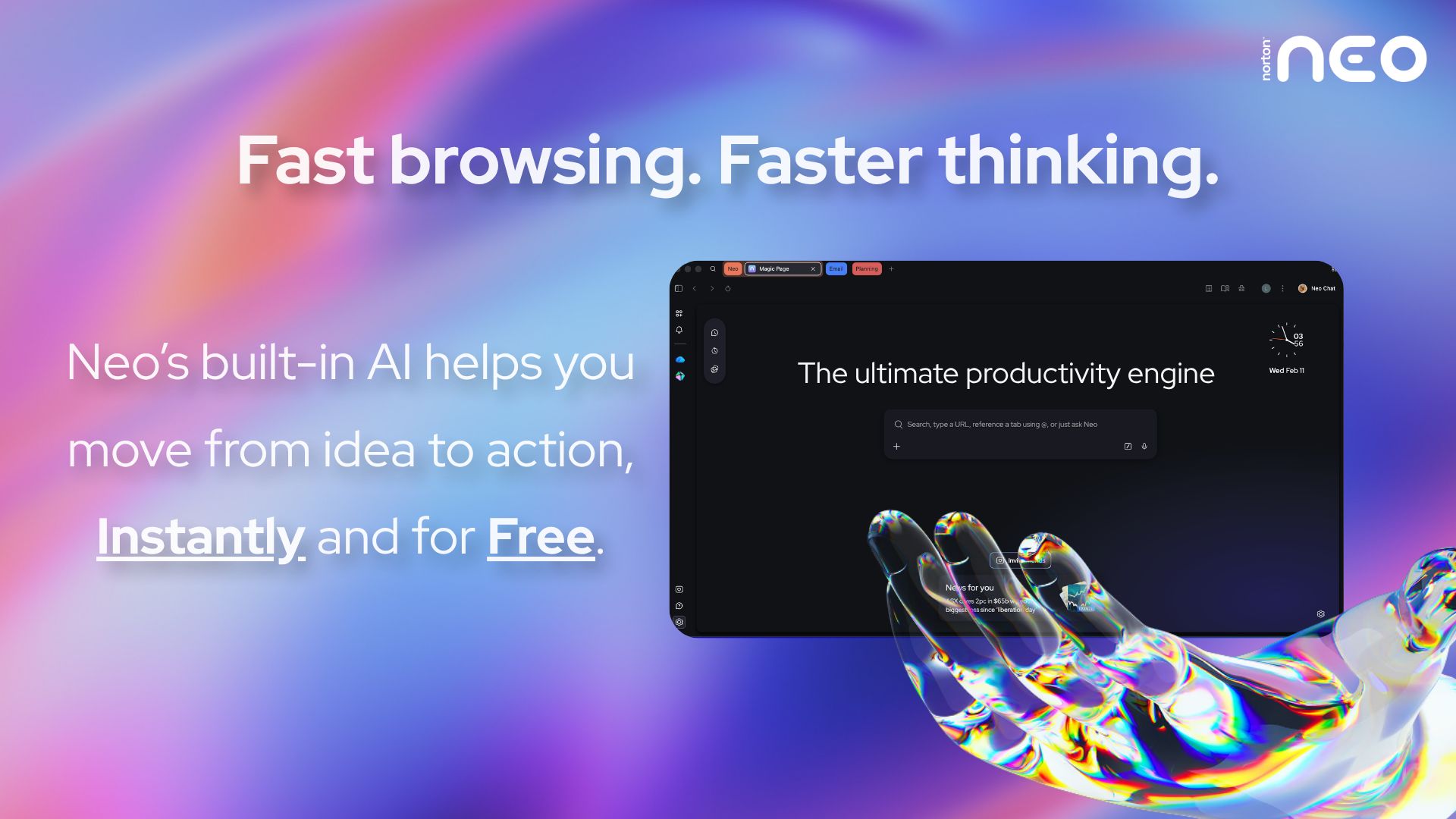
Your browser gets you to a page. Norton Neo gets you to the answer. The first safe AI-native browser built by Norton moves with you from idea to action without slowing you down. Magic Box understands your intent before you finish typing. AI that works inside your flow, not beside it. No prompting. No copy-pasting. No switching apps.
Built-in AI, instantly and for free. Privacy handled by Norton. Built-in VPN and ad blocking protect you by default. No configuration. No extra apps. Nothing to think about.
Fast. Safe. Intelligent. That's Neo.
I created a 3 min short film using Seedance text to video method
OpenAI Introduces GPT‑Rosalind

On April 16, OpenAI launched GPT Rosalind, named after the chemist Rosalind Franklin. This is not a general chatbot. It was built from scratch for biology and drug discovery. It can analyze protein structures, sift through genomic data, generate research hypotheses, and help plan experiments. OpenAI trained it on 50 specific biological workflows and it is already being tested by Amgen, Moderna, and Thermo Fisher Scientific.
They also released a free plugin for their Codex platform that connects to over 50 scientific databases. Access is restricted to verified research organizations. When the news broke, shares of several AI drug discovery companies like Recursion Pharmaceuticals and Schrodinger dropped more than 5%. The market clearly sees this as a competitive threat to existing players in the space. (Source: Bloomberg)
I built a Aamzon product review analyser to help buyers make informed decision - Here is how you can do it in 5 min
Anthropic Teamed Up With Apple, Google, Microsoft, Amazon, and Nvidia on Cybersecurity
Anthropic launched something called Project Glasswing in early April. It is a collaboration with five of the biggest names in tech to test their unreleased Claude Mythos model for defensive cybersecurity. The model has already found thousands of vulnerabilities across major operating systems, browsers, and critical software.
Anthropic is putting up to $100 million in usage credits on the table and working with government stakeholders to coordinate the effort. The urgency makes sense. As AI models get more capable, the tools available to attackers get more powerful too. Anthropic is essentially saying "let us find the holes before the bad guys do." Security experts warn that similar offensive capabilities will be widely available within months, which is why the timing of this initiative matters so much. (Source: Anthropic)
The prompt I use to turn any meeting transcript into a complete action plan.
THE PROMPT:
(Copy this exactly - do not change the structure)

"You are an expert project manager and executive assistant.

I am going to paste a raw meeting transcript below.

Your job is to extract a complete, structured action brief from this transcript.

Format your output in exactly these sections:

---

MEETING SUMMARY (3 sentences maximum) What was this meeting about, what was the core problem being discussed, and what was the general outcome.

---

DECISIONS MADE List every decision that was reached in this meeting — even informal ones. Format as: - Decision: [what was decided] - Decided by: [who made or confirmed the decision] - Context: [one sentence on why this decision was made]

---

ACTION ITEMS List every action item mentioned or implied in this meeting. Format each one as: - Task: [specific action to be taken — be precise, not vague] - Owner: [the person responsible — use the name from the transcript] - Deadline: [exact date if mentioned / 'not specified' if not] - Priority: [High / Medium / Low based on the urgency and importance discussed]

---

OPEN QUESTIONS List every question that was raised but NOT resolved in this meeting. Format as: - Question: [the unresolved issue] - Who needs to answer it: [person or team responsible] - By when: [deadline if mentioned / 'not specified' if not]

---

RISKS AND BLOCKERS List anything mentioned in the transcript that could slow down, block, or threaten the work discussed. - Risk/Blocker: [description] - Raised by: [who flagged it] - Suggested mitigation: [any solution discussed / 'none discussed' if not]

---

FOLLOW-UP MEETING NEEDED Yes or No. If Yes: suggested agenda items based on the open questions and unresolved items above.

---

Do not summarise loosely. Extract specifically. If a name is not mentioned for an action item - write 'owner not assigned' rather than guessing. If a deadline is not mentioned - write 'not specified' rather than suggesting one. Be precise over being comprehensive.


Here is the transcript: [PASTE YOUR TRANSCRIPT HERE]"
OpenAI Thinks It Can Make $100 Billion a Year From Ads by 2030
According to an Axios report from April 9, OpenAI shared projections with investors showing it expects $2.5 billion in ad revenue this year, growing to $11 billion in 2027 and $100 billion by 2030. Those numbers assume ChatGPT products will reach 2.75 billion weekly users by the end of the decade. Their ad pilot on the free and lower priced ChatGPT plans already crossed $100 million in annualized revenue within six weeks and has attracted over 600 advertisers.
The logic makes sense on paper. When someone asks ChatGPT for help buying a laptop, their intent is crystal clear, which makes ads potentially very valuable. But there is a real tension here. One of the biggest selling points of AI assistants was that they worked for the user, not for advertisers. That promise gets complicated once ads enter the picture. (Source: Yahoo)
Top AI tools to check out…
I’ve been building a best AI tool directory where you’ll find the best of the best tool and their USECASES.

How Satisfied Are You with Today’s Newsletter? |
Thanks for your time!
Shailesh & OpenAILearning team